
BLOG
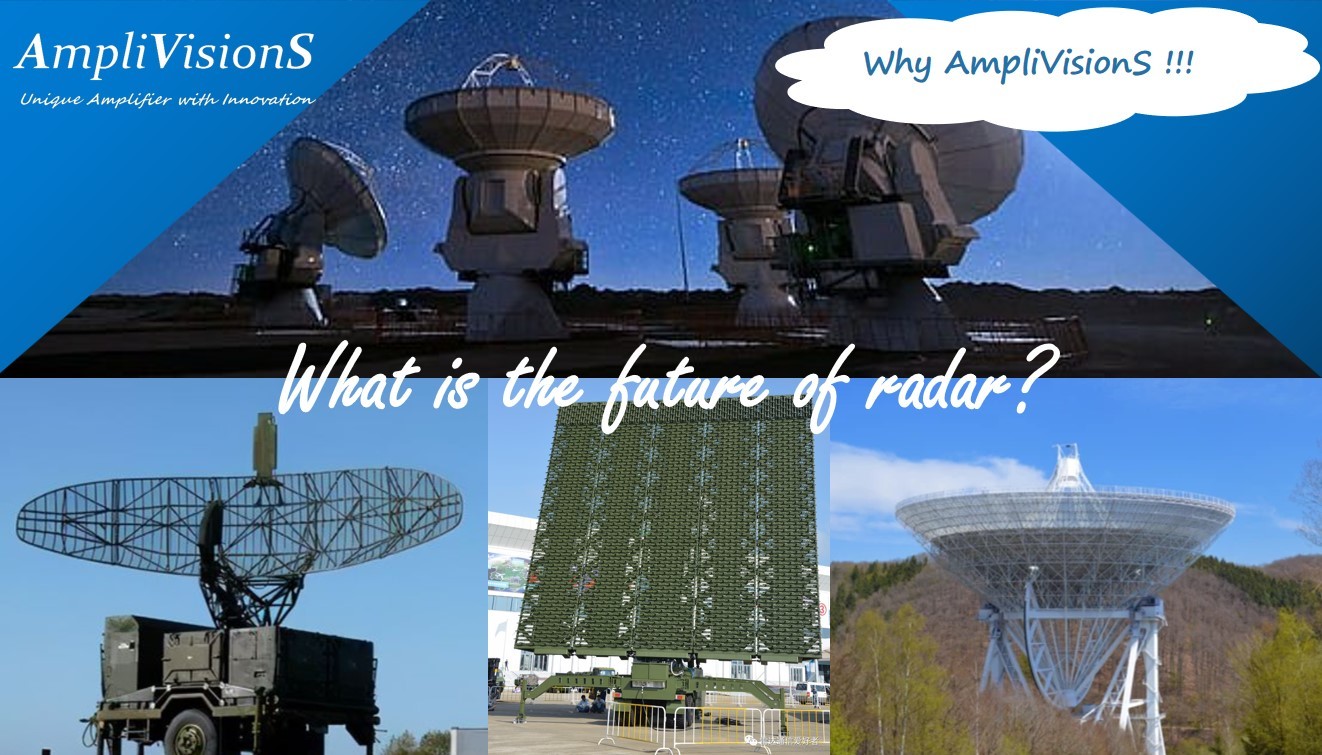
What is the future of radar?
2023-07-19
Radar, as a revolutionary sensing technology, has transformed the way we perceive and interact with the world. Its unique capabilities offer a multitude of advantages, making it indispensable across various applications. At the forefront of this radar revolution, AmpliVisionS takes pride in providing cutting-edge pulse products that further amplify these advantages, driving the future of radar technology. Radar technology offers unmatched sensing capabilities, all-weather operation, high precision and resolution, non-intrusive detection, and versatility across multiple industries.
The future of radar technology holds exciting possibilities and transformative advancements. As the demand for more capable and efficient radar systems continues to grow, innovation remains the driving force behind its evolution.
Some key trends that shape the future of radar technology include:
1. Higher Frequency Bands: As the need for increased data rates and resolution rises, radar systems will explore higher frequency bands to achieve enhanced performance and precision.
2. Integration of GaN Technology: Gallium Nitride (GaN) technology, such as that utilized in AmpliVisionS products, will become increasingly prevalent in radar applications due to its higher power density and efficiency, paving the way for more compact and powerful radar systems.
3. Multi-Functionality: Future radar systems will be designed with multi-functional capabilities, combining surveillance, communication, and navigation functionalities in a single platform, leading to more cost-effective and versatile solutions.
4. Advanced Signal Processing: Leveraging artificial intelligence and machine learning algorithms, radar signal processing will become more sophisticated, enabling real-time analysis, improved target identification, and reduced false alarms.
AmpliVisionS, as a pioneer in radar amplifier solutions, offers an array of pulse products designed to push the boundaries of radar technology.
Some of our pulse amplifiers:
1. Model: AVPR1300H59 Frequency: 1.2-1.4GHz Power Level: 800W
This high-power amplifier caters to the L-band frequency range, providing exceptional performance for radar applications requiring long-range detection and precision.
2. Model: AVPR1100H56 Frequency: 1.025-1.150GHz Power Level: 400W
Tailored for the L-band, this amplifier balances power and frequency to meet the demands of various radar systems, including air traffic control and surveillance.
3. Model: AVNP9250H57 Frequency: 8.9-9.6GHz Power Level: 500W
Optimized for the X-band, this amplifier delivers robust power output, making it ideal for radar systems requiring high resolution and accuracy.
Discover the future of radar with AmpliVisionS, experiencing unmatched technology and precise solutions. Partner with us to shape a safer and more connected world through innovative radar solutions.

■
400W High Power Pulsed Amplifier——AVPR1100H56
The AVPR1100H56 is an L-band solid-state pulsed power amplifier based on high-power RF LDMOS technology, with integrated control, monitoring, and protection functions.
—
2026-10-09
■
Our team will be on holiday from October 1 to October 7, 2026, and normal business operations will resume on October 8, 2026. During the holiday, our response time may be slightly longer than usual. We appreciate your understanding and patience.
■
ONE MOON, A THOUSAND YEARS OF MEANING
Happy Mid-Autumn Festival.
■
RF Power Amplifier Datasheet Guide ——Common Terms & Abbreviations
RF power amplifier datasheets contain a wide range of technical terms and abbreviations. But understanding the numbers starts with understanding what they actually represent.
■
70W Rack-Mount RF Power Amplifier-AVBR2080U48
The AVBR2080U48 is a solid-state broadband RF power amplifier based on Class AB architecture and RF GaN technology. It is specified for operation from 2.0 to 8.0 GHz, with a typical Output P1dB of 43 dBm.
■
SWR vs. Return Loss — How Do You Interpret Them?
VSWR and Return Loss often appear together in RF specifications. What do these two parameters actually tell us, and how should we interpret their values?