
BLOG
What are the difficulties of radar systems for drone detection?
2023-11-07
Radar systems play a critical role in detecting and tracking various aerial targets, including Unmanned Aerial Vehicles (UAVs). However, UAV detection presents unique challenges due to their small size, low altitude flight, and evolving stealth technologies. In this article, we'll explore the key challenges associated with UAV detection using radar systems:
1. Miniaturization and Stealth: Many UAVs are designed to be compact and stealthy, making their radar cross-section (RCS) significantly smaller. They often fly at low altitudes, further reducing their detectability. To detect these targets, radar systems must maintain line-of-sight, which can be challenging in urban environments where UAVs may appear for only a few seconds before disappearing.
2. Agility and Hovering: UAVs are highly maneuverable and capable of rapidly changing their flight path and speed. Certain flight modes, such as hovering and vertical movement, pose difficulties for radar detection, especially when employing automated tracking algorithms.
3. Complex Background Noise: Radar systems must distinguish UAV echoes from a complex background of interference sources. UAVs may fly in urban, mountainous, or maritime environments, all of which introduce significant radar interference sources, including communication antennas, two-way radios, telemetry systems, and even power lines and LED lights.
4. Application of Stealth Technologies: UAVs employ various stealth technologies to reduce their radar cross-section, including radar-absorbing materials, stealth coatings, non-metallic components, and composite materials. Specialized designs, such as angled surfaces, scatter radar waves rather than reflecting them, further diminishing detectability.
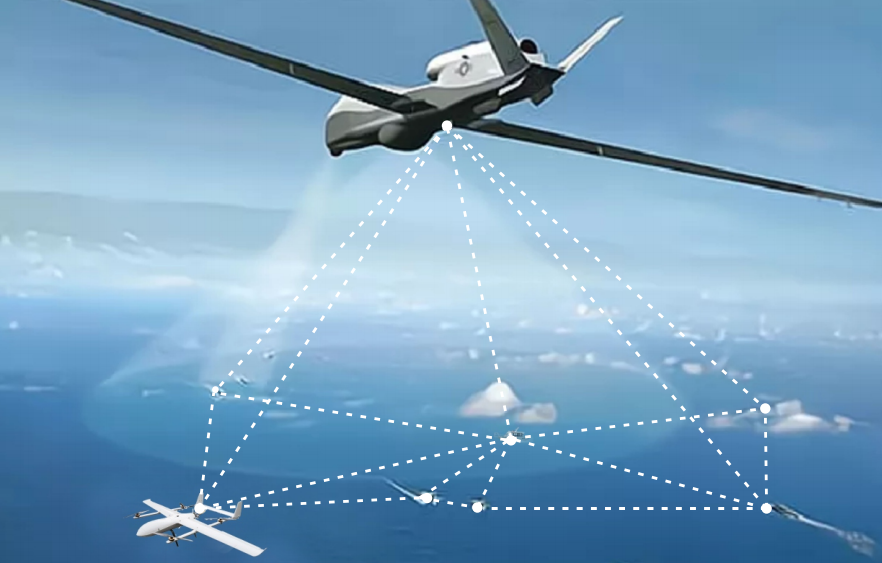
5. Multi-Target Tracking: Modern battlefield scenarios often involve multiple UAVs operating simultaneously, increasing the need for radar systems that can efficiently track and differentiate multiple targets. Achieving a balance between sensitivity and minimizing false alarms is a considerable challenge.
6. Cost and Resource Constraints: While advanced radar technologies can enhance UAV detection, they often come at a high cost and require substantial computational resources. UAVs, on the other hand, are relatively low-cost and can be deployed in large numbers, posing a significant challenge to radar technology.
7. The Need for Multisensor Integration: Radar systems must complement other technologies like electro-optics, infrared, and radio-frequency sensing to improve detection accuracy and reliability.
In summary, detecting UAVs with radar systems is a complex task that demands ongoing research and development efforts. As UAVs continue to evolve and become more accessible, radar systems must adapt to overcome these challenges and maintain their effectiveness.
Previous page:

■
200W High Gain Power Amplifier——AVBR00205H53
The AVBR00205H53 is a 200 W high-gain solid-state broadband power amplifier designed for demanding RF applications. Utilizing high-power RF LDMOS transistors and a solid-state Class AB architecture, it delivers instantaneous ultra-wideband performance.
—
2026-11-17
■
Thermal Management and Protection in RF Power Amplifiers
Heat generation is inevitable in RF power amplifiers, but how it is managed makes a difference.
■
50W High Gain Power Amplifier——AVBR2570H47
The AVBR2570H47 is a high-power broadband solid-state amplifier operating across 2.5–7 GHz, offering 50 W typical saturated output power and 47 dB power gain. Its instantaneous ultra-broadband design provides wide frequency coverage without band switching.
■
RF Power Amplifier: Abnormal Test Data Handling Process
During RF power amplifier performance testing, key parameters are measured to verify compliance with product specifications. Although uncommon, abnormal test data may occasionally occur. How should we handle such situations to identify the root cause and ensure reliable test results?
■
30W High Gain Power Amplifier——AVBR1060H45
The AVBR1060H45 is a 30 W high-gain solid-state broadband power amplifier operating from 1–6 GHz and providing 45 dB power gain, making it suitable for a wide range of broadband RF applications.
■
RF Power Amplifier: From Final Assembly to Delivery
What happens before an RF power amplifier is ready for shipment? From final assembly to packaging, each stage plays a role in verifying product quality, RF performance, and operational readiness.